To find the best media possible for my final piece, I decided to do some experimentation. After cutting three MDF boards to A5, I sketched pictures of the animals that make up the Chimera, choosing a different form of media for each to help me see which one works best and which one is most comfortable for me to use.
The lion was painted with gouache and, although quite thick and messy, was easily mixable and dried quickly. Secondly, I painted the goat in acrylic. This had a familiar feel to it but the colours didn't mix as easily as the gouache. The snake was in oil paint, of which I liked the most because of the texture it made and its pallet of colour. After deciding to use oils, I experimented on a canvas to test its effect on a different material. I felt that this was this best way forward, and that it would add to the oil paint to make a good background, as well as a striking foreground.
Tuesday, 26 April 2016
FMP Animal Photos (primary research)
After deciding to focus on the monster, Chimera, for my final piece, I needed photos to work from photographs so the painting or drawing (I haven't decided on the media yet) will have a real life feel to it. The Chimera is made up of three different animals; a lion, a goat and a snake. Here are some of the photos I took -
These pictures were taken at the Yorkshire Wildlife Park. Being the most important part of the Chimera, photos of the lions were my first priority.
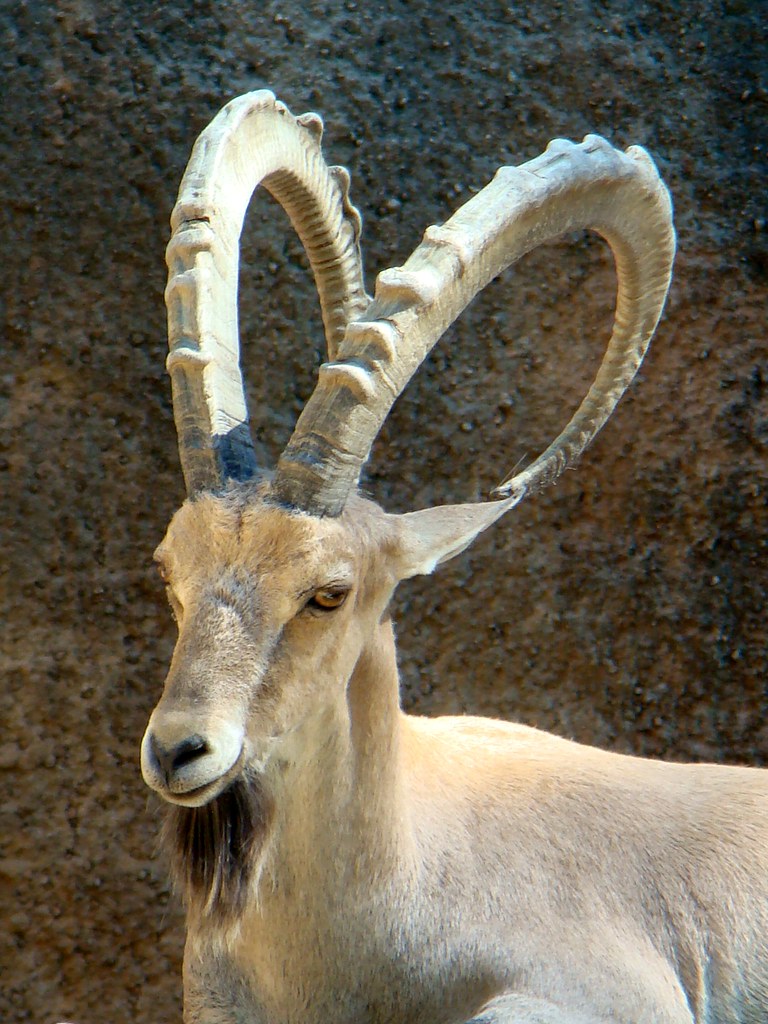
The species of goat is an African mountain goat, or Ibex and like the lion, these photos were taken at a zoo.


Not taken at a zoo like the others, this snake's species is a Royal Python and is my friend's pet.

I used these pictures to familiarize myself with the animals I needed to draw by sketching them and using coloured media. Here are some of my studies on mood boards -
These pictures were taken at the Yorkshire Wildlife Park. Being the most important part of the Chimera, photos of the lions were my first priority.
The species of goat is an African mountain goat, or Ibex and like the lion, these photos were taken at a zoo.


Not taken at a zoo like the others, this snake's species is a Royal Python and is my friend's pet.

I used these pictures to familiarize myself with the animals I needed to draw by sketching them and using coloured media. Here are some of my studies on mood boards -
FMP Le Minotaure - George Frederic Watts (artist research)
George Frederic Watts was widely considered to be the greatest painter of the Victorian era. A portraitist, sculptor, landscape painter and symbolist, Watts's work embodied the most pressing themes and ideas of the time, earning him the title "England's Michelangelo". He famously said the phrase, “I paint ideas, not things". During his last years Watts also turned to sculpture, completing his most famous work, Physical Energy, in 1902.

_Ellen_Terry_('Choosing')_by_George_Frederic_Watts.jpg)
FMP Greek Mythology
Already being knowledgeable on the subject of greek mythology, I decided to cover it as part of my research to be able to learn more about it and simply because of the huge roster of creatures and legends at my disposal to draw. Many of these creatures have become iconic and are very recognizable because of their unique looks.

MEDUSA

CHIMERA

CHARYBDIS

CERBERUS

CENTAUR

NEMEAN LION

MINOTAUR

HYDRA
MEDUSA

CHIMERA

CHARYBDIS
CERBERUS
CENTAUR
NEMEAN LION
MINOTAUR

HYDRA
Thursday, 7 April 2016
FMP Hyakkai Zukan - Sawaki Suushi (artist research)
In the sophisticated popular culture of the Edo period (1603-1868), much attention was devoted to Japan's rich variety of traditional monsters and apparitions, known as yokai. Sometimes frightening, sometimes humorous, these compelling Japanese folk creatures were the subject of numerous artistic and literary works. One such work was Hyakkai Zukan, a collection of picture scrolls completed in 1737 by Sawaki Suushi, a relatively unknown artist. Hyakkai Zukan's colorful depictions of Japan's most notorious creatures inspired yokai artists for generations. Here are some of Sawaki Suushi's paintings and my own study of the Ushi-Oni (cow devil) at the top -


Monday, 4 April 2016
FMP Odilon Redon (artist research)

Odilon Redon, (born April 20, 1840, died July 6, 1916) was a French symbolist painter, lithographer, and etcher of poetic sensitivity and imagination. His prints explore haunted, fantastic, often macabre themes and foreshadowed the Surrealist and Dadaist movements. His oils and pastels, mainly still life drawings of flowers, won him the admiration of Henri Matisse and other painters as an important colourist. Redon produced nearly 200 prints beginning in 1879 with the lithographs collectively titled In the Dream. He completed another series (1882) dedicated to Edgar Allan Poe, whose poems had been translated into French. Though there is a relationship between his work and that of the Impressionist painters, he opposed both Impressionism and Realism as wholly perceptual. Here is my own study of his work along with other examples.
Subscribe to:
Posts (Atom)